Pilates instructor insurance
What cover a Pilates teacher and studio owner need, and what to check in a policy. Read the insurance guide →
If you already teach classes and want to know how to open a Pilates studio in the UK, the big decisions come in this order: what you will teach (mat, reformer or both), where, with what equipment, and who will teach alongside you. Pilates teaching isn't regulated by law, so the paperwork is light, but premises, equipment and staff are where the money and the risk sit. This guide works through each, then covers getting online and your first 90 days.
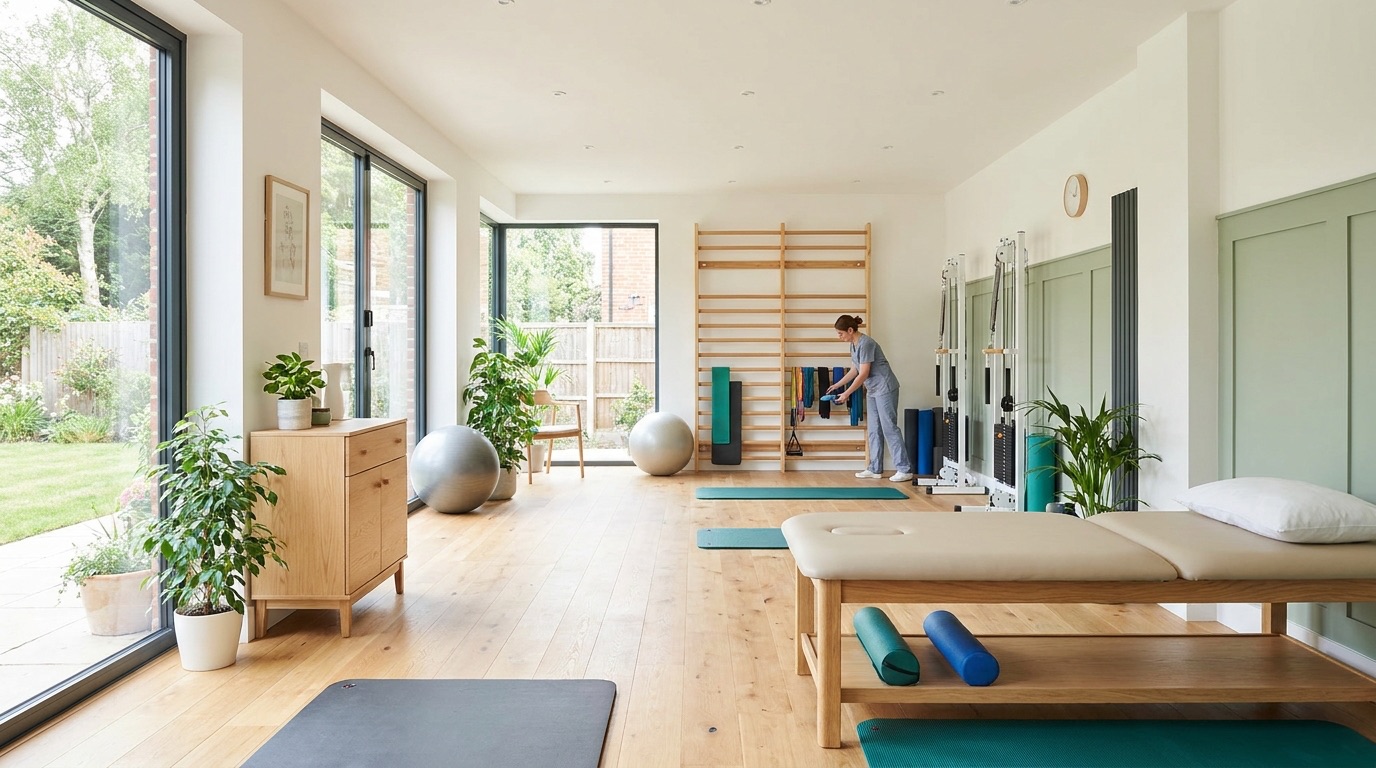
No law says who can teach Pilates in the UK, but insurers, gyms and clients all look for recognised training, and mat and reformer are trained separately.
The most common starting point is a Level 3 diploma in mat Pilates, such as Active IQ's Ofqual-regulated Level 3 Diploma in Instructing Pilates Matwork. CIMSPA, the fitness sector's professional body, offers a Pilates-based matwork practitioner status for instructors who meet its standard. It covers matwork only.
Teaching on reformers, towers or a Cadillac needs its own training. Routes range from short Level 3 reformer certificates to longer full-equipment programmes from schools such as Body Control Pilates, STOTT PILATES (Merrithew) and Polestar. The Society for the Pilates Method, formed by UK schools in 2021, sets standards for matwork and studio apparatus training. Check that your training, and every instructor's, covers the equipment you will buy, because insurers check qualifications against what you teach.
A studio needs more than a freelance teacher's policy. On top of public liability and professional indemnity, you will want cover for the premises, contents and equipment, and employers' liability is a legal requirement once you employ anyone. Our guide to Pilates instructor insurance goes through what to check.
If you play recorded music in classes, or in the background at reception, you will normally need a licence. TheMusicLicence from PPL PRS covers music in fitness classes and music played for customers. It is priced on classes and attendance: when we checked in October 2026, its worked example was £345 a year plus VAT for three classes a week over 50 weeks, so a full timetable costs more. Livestreamed and recorded online classes are licensed separately.
Many instructors teach as sole traders. Once you are signing a lease and paying staff, a limited company is worth discussing with an accountant. Either way, register with HMRC, use a separate business account and set money aside for tax.
In England, a Pilates studio normally falls within Class E(d), indoor sport, recreation or fitness, part of the wider Class E that also covers shops, offices and clinics. Moving between Class E uses is often possible without a planning application, but conditions on the building's permission can restrict it, so check with the council's planning team before you sign. The Planning Portal explains the use classes. Wales, Scotland and Northern Ireland have their own systems.
Commercial leases are negotiable, and the first draft usually favours the landlord. Before you sign, check:
Ask about business rates and small business rate relief, and have a solicitor read the lease: it is likely to be your biggest commitment.
After the premises, equipment is usually the biggest upfront cost.
Few studio reformer brands publish UK prices. These are the figures we could find when we checked in October 2026:
| Reformer | Price found | Where |
|---|---|---|
| Align-Pilates C8-S Pro (marketed for group studios) | £2,695 including VAT, plus £200 pallet delivery | UK retailer gymequipment.co.uk |
| Balanced Body Allegro 2 | Price on request | UK dealers |
| Merrithew (STOTT PILATES) SPX Max | No UK price published | UK distributor, on request |
To give a sense of scale, eight reformers at that entry price come to over £20,000 before delivery, accessories or any towers. Get written quotes that include delivery, installation, a commercial-use warranty and servicing.
The numbers that matter are simple: what the studio costs each month, how many people each class holds, and how full classes need to be to cover it.
If almost every class needs to be full to break even, start smaller.
Which? put a typical UK group reformer class at £20 to £45 in February 2026, depending on location and the type of studio, with private sessions at £70 to £200. Price against studios near you, not against London.
A reformer studio needs software that lets clients book a specific machine, caps each class at your number of reformers, runs waitlists, sells packs and memberships and charges late-cancel fees. The main options used by UK studios include:
| Software | Built for | Price (checked October 2026) |
|---|---|---|
| Mindbody | Fitness, wellness and beauty businesses | Starter from £89 a month per location; higher tiers on request |
| Momence | Studios, with versions for Pilates and yoga | Price on request |
| Glofox | Gyms and studios, with a Pilates version | Price on request |
| TeamUp | Fitness studios, including Pilates | Published, and scales with your number of active customers |
Ask for a demo using your own set-up (for example, a ten-reformer class, monthly members and your cancellation rule) and check that machine booking, waitlists and billing work the way you need before you sign. Compare contract length and card fees too.
Most new studios run on the owner plus freelance instructors paid per class, but calling someone self-employed doesn't make them so. Status depends on the working relationship: who decides when and how they work, whether they can send a substitute, and whether they work for other studios. If you set their timetable, tell them how to teach and they work only for you, they may be employees or workers in law, with rights such as holiday pay, and you may owe PAYE and National Insurance. If an instructor works through their own limited company, the off-payroll rules (IR35) can come into it as well.
HMRC's employment status tool gives its view, but take advice from an accountant or employment adviser before you write contracts. Either way, check each instructor's training covers the equipment they teach on.
People choosing a studio want the timetable, prices, who teaches and where you are, then a way to book. Your site needs:
Because a studio has more to cover than a solo teacher, it usually needs more than five pages. Our website tiers and our page on websites for trainers and coaches show what each includes.
With a studio address, you can appear on Google Maps when people search for "reformer Pilates near me". Set it up before you open, with your exact address, opening hours and a category such as "Pilates studio". Add photos of the room and ask early clients for reviews. Our guide to Google Business Profile covers set-up step by step.
For many new studios, Instagram and the clients who follow you from your current classes bring the first bookings. Show the room, the instructors and short clips of classes (with consent), post the timetable and intro offer, and put your booking link in your bio. Start posting while you fit out.
Treat this as a rough order rather than a deadline. Fit-outs often run late.
There is no legal requirement in the UK, but insurers and clients expect recognised training for everything taught in the studio. For a reformer studio, that means reformer training for you and every instructor, not only a mat qualification.
Teach in hired halls, gyms or community centres first, or offer one-to-one reformer sessions on a single machine. It tests demand before you take on a lease. Check the venue's music licence and that your insurance covers each place you teach.
In England, a studio normally sits in Class E(d). If the premises are already in a Class E use you often won't need permission to change, but conditions on the building can restrict it, so ask the council's planning team before you sign. A studio at home or in your garden is more likely to need permission.
They can, if the working relationship is genuinely self-employment. If you control when, where and how they teach and they can't send a substitute, they may be employees or workers in law. Use HMRC's employment status tool and take advice before you write contracts.
We build and look after websites for Pilates studios and teachers, with the timetable and booking from your studio software built in. Grow (£949 setup, then £59 a month) suits most new studios, because each class type gets its own page and the local search groundwork is done. Launch (£449 setup, then £39 a month) suits a teacher with one room and a short timetable, and Scale (£1,950 setup, then £129 a month) suits studios with several locations or a larger team. There is no long contract.
If you are still teaching in hired halls, the booking page your software provides and a Google profile may be all you need for now, and you can set up both yourself. A proper studio website matters once there is rent to cover and classes to fill.
What cover a Pilates teacher and studio owner need, and what to check in a policy. Read the insurance guide →
Qualifications, HMRC, where to train and a plan for your first 30 days. Read the PT guide →
Guides for physios, therapists, dietitians and other practitioners starting out. See all guides →
A short call about your timetable, your premises and how you want clients to find you. We will tell you what we would set up first, and what can wait.
Book a discovery call →